Like Jason's Facebook Page

Showing posts with label New Orleans. Show all posts

Wednesday, September 30, 2015

St. Joseph Plantation: A Mourning Tour

St. Joseph Plantation, Vacherie, Louisiana

Take a drive along Louisiana's Highway 18, a winding stretch of road that matches the meandering path and measured pace of the Mississippi river, just west of a thin sliver of a town called Vacherie, and you'll soon find the elegant, Creole style St. Joseph Plantation.  If you do so in October you will be able to tour a home that is in the midst of observing the traditional mourning customs of the Creoles.

St. Joseph is a working sugarcane plantation, surrounded by fields of tall, green cane and an industry that supplies over 32,000 jobs to Louisiana.  While sugarcane is grown all across the lower half of the state, it is here, along the banks of this great river, that sugar first became a prominent aspect of New Orleans society.  And it was here that Valcour Aimé, known as the "Louis XIV of Louisiana", built his sugar empire, which included St. Joseph, a home he bought for his daughter Josephine in 1858.

St. Joseph Plantation, Vacherie, LA
Restoration of the plantation began in 2002 by descendants of several families that once owned St. Joseph.  We were pleased to learn that our tour guide for the day would be Diane Butler, a great, great, great granddaughter of Joseph Waguespack, who bought the plantation in 1877.  Diane was more than just a tour guide.  We did not feel as if we were touring a historical museum.  Instead, we felt as if Diane had invited us into her home, spinning tales of her families history as she opened up each room to us.

What really set this tour apart from so many other plantation tours was the way in which Diane wove the stories of those who lived at St. Joseph into those of the families all along this stretch of the Mississippi.  In fact, one quickly came to understand that St. Joseph, like Oak Alley Plantation, Felicity Plantation, Laura Plantation and others in the area, were all a part of a tight-knit community; a neighborhood made up of families that grew up together, intermarried, and whose successes and failures were indelibly tied together.  As proof of this, Diane told us of her grandparents.  Her grandmother grew up at St. Joseph, her grandfather at Oak Alley, and their courtship began as they promenaded along the levy.

Front door draped with black crape and wreaths to indicate a death in the home.

During the month of October, St. Joseph Plantation observes the mourning customs of the early Creoles.  From the road one can first see the front door with crape and wreaths.  This was a way for the family to announce to outsiders that a death had occurred.  In this way concerned friends and relatives did not have to stop and inquire if a sick member of the family was still alive.  They could wait until they saw the draping of the entrance after which they would know the family member had passed.

The body was prepared and placed in a coffin for viewing in the parlor.  Sometimes a bedroom was used.  As the families at St. Joseph were Catholic, a prie-Dieu was placed beside the coffin so that visitors could pay their respects and pray for the deceased.

The coffin lies in the parlor, ready for visitors.

Because embalming was not common until after the Civil War, efforts had to be made to control the odor of death.  Sometimes, a bucket of ice was placed under the coffin to keep the corpse cool.  Candles were lit at both ends while fragrant flowers and greenery were placed about the room.  This was important, since a vigil was kept for two days in which the body was never left alone.

As we followed along with the tour, I wondered about this now abandoned custom.  We are so isolated from the dead these days.  Unless you request to be involved, as my wife did when she applied the makeup for her mother before the viewing, you probably won't have much interaction with the body of your deceased loved one.  Are we missing something when we don't have them in the house for two days?  When one could sit with the body for hours, reflecting on their lives, the impact they made, or maybe needing that chance to say a few words you couldn't before?  Perhaps it is something we need to bring back.  I feel certain it won't ever be.  Certainly not any time soon.

Mirror draped for mourning.

With mirrors covered and clocks stopped at the time of death, a household in mourning seemed to hold its breath.  In a way, time did actually stop as the community gathered to console the family and the deceased was prepared and sent off into the afterlife.  Again, there seemed to be more attention paid to this event, more focus on the man or woman or child who was passing on.  Today we drop by to a viewing after work, and if we can we attend the burial, a short occasion managed by strangers whose business it is to get the body propped up for a quick look and an even quicker eulogy.  Friends and family might stand around for finger foods for a short time.  But in the end we all have to rush back to living.  Death is not a subject over which we like to linger.

Immortelles hang on the wall at St. Joseph Plantation

In one of the rooms at St. Joseph we were shown a collection of wreaths known as immortelles.  These decorative wreaths were often taken to the cemetery during the burial, and might be either left there or brought back to house as a symbol of remembrance.  They often included the use of glass bead and photographs under glass.  The immortelles hanging at St. Joseph were found in the attic.

A mourning dress on display, alongside the portraits of Josephine Aime
and her husband Alexis Ferry.

Of course, much effort went into dressing for this time of mourning.  And for a widow, there were a great deal of rules and customs to follow.  They would wear dull black mourning clothes for the six months during the first stage of mourning, sometimes referred to as deep mourning.  There might be a second stage, half-mourning, in which a few muted colors such as heliotrope (a reddish, blue-red) might be worn.  Though re-marriage was allowed for widows after a year and six weeks, many widows not only did not remarry, they might choose to dress in mourning for the rest of their lives.  Today we would feel the need to tell a widow to move on, to not dwell on their loss, but is that really the best choice?  For many women, then and even now, it may not be.  But it would have been an easier choice to make in the past when it was more socially acceptable to do so.

The rear porch and entrance to St. Joseph's Plantation.

The Mourning Tour runs from October 1st to November 2nd.  And I encourage everyone to take advantage of this peek into customs that have passed from our culture over the last hundred years.  The staff at St. Joseph's are friendly and eager to share their home and history with each and every visitor.  And whether you come for the Mourning Tour or just a regular tour, you'll be glad you did.  The grounds are enchanting and the history fascinating.  It is a beautiful day-trip you won't soon forget.

While you are at the plantation you can buy a copy of the book Early Creole Mourning Customs in South Louisiana.  Most of my research for this blog was taken from its pages.

For more information on St. Joseph Plantation please visit their website:
St. Joseph Plantation

Special thanks to Diane Butler and Denise Borell for their generous help and eagerness to share their family's home and history with us.


Friday, October 17, 2014

New Orleans 2015 Calendars from Saint James Infirmary Books


New Orleans 2015 Calendars are now available.  Check out this unique tour of the city of New Orleans.
The first of our New Orleans Calendars feature some very different looks at the French Quarter.  New Orleans is known for its lamp posts, and we usually see them photographed at night.  But you can't miss them during the day either.  They are everywhere you look.  We thought it would be fun to focus on them this year.


Our second calendar this year focuses on the exposed brick of the French Quarter.  We love the brilliantly painted facades of the Vieux Carré, but we also can't help but notice all of the exposed, often heavily weathered brickwork that adds depth to the French Quarter views.

Just click on the links below to get your calendar.  We hope you enjoy them!


Friday, September 19, 2014

French Quarter Stroll

Royal Street

French Quarter, New Orleans, Louisiana

A perfect day in the French Quarter is easy to experience.  Even in the heat of a late summer day it is relaxing to stroll along these small and colorful streets.  Summer can be a slow time for the tourist business here and some shops were just reopening after a few renovations in preparation for the coming Halloween season.  Fresh paint covered many of the historic facades, in some places, the painters were still brushing on colors as approved by the Vieux Carré Commission, the city planning board dedicated to preserving the historic appearance of this village within a city.  Crisp, new flags seemed to hang from every other balcony.  Expectancy charged the air.  I had the feeling that tourist buses were already loaded and crossing the Lake Pontchartrain Causeway, their arrival mere minutes away.


I always love to see all of this activity in the Quarter.  Mornings are especially fun.  Delivery vans fill the streets, shops are opening up, streets are washed down, there is a brisk, sometimes hectic combination of tradesmen getting to work on whichever project is on the day's schedule.  This is the face of the French Quarter that most tourists miss as they sleep in from a late night of partying.  But it is the time I enjoy the most in this little corner of the world.


Don't get me wrong.  The streets weren't empty.  And a few street artists were out to entertain those of us enjoying the afternoon.  As you can see, construction is always underway here, even when there isn't a wall to support a ladder.  This hard worker is determined to get that first two by four nailed in place.  I've always thought he should start at the bottom.  But He seems to know what he is doing.  And in case you weren't familiar with this demonstration, be assured that ladder is not bolted down to the stone.  


Be sure to carry a pocketful of one dollar bills for the street artists.  Jackson Square wouldn't be Jackson Square without the playful tunes of a dixieland band.  And these entertainers aren't paid by the city.  They will do their utmost to entertain, they won't be shy about asking for donations and if they see you dropping a little something in the bucket they are quick to voice their appreciation.  

It was here on Jackson Square that I helped out an older couple from Manchester, England.  You can always find a pair like this, taking that single shot with a camera when what they really want is a photograph with both of them in it.  After helping them get a few photos in front of the Cathedral I talked with them a little while.  It was their third trip to New Orleans.  It was just a few days before Scotland voted on the question of independence from Great Britain.  They were hoping the Scots would stay in the Union.  They could see no advantage to either Scotland or England if Scotland went their own way.  I'm sure they were happy to read the news from across the pond today when it was announced that Scotland had chosen to keep Britain unified.


If you head over to Canal Street (which is technically outside of the French Quarter) glance up at the lamp posts that flank the street cars.  There is some nice detail work between the lamps.  But what you'll also see are plenty of beads hanging around from Mardi Gras.  Some of them will be covered in beads, and some will have only a few.  This one I captured has just the one strand, seemingly laid carefully to match the design.


At St. Charles and Canal Streets, if you're patient, you'll see one of the historic St. Charles street cars pass its modern cousin, the Canal street car.  That's the one you'll want to catch if you want a ride over to the Garden District.  (Even better than the Garden District is Lafayette Cemetery Number Two.  The St. Charles street car  will take you to both places.)


Not every house in the French Quarter has been freshly painted.  And I'm glad.  It adds to the charm of this place.  It helps us to remember that we aren't walking down a street in Disney World, where everything has been engineered for our entertainment.  It helps us remember that this village will be three hundred years old in just four years from now.  It has stood up to the winds and rains of uncounted hurricanes, the changing politics of the Spanish, the French, and the Americans, and it will be here long after the tourists pack up and leave at the end of this coming season.  It is, after all, a living neighborhood where its residents work and play and go about their everyday lives.

Monday, September 15, 2014

Oak Alley Plantation: An Iconic View (Part One)


Oak Alley Plantation, Vacherie, Louisiana

To walk the grounds of Oak Alley Plantation is to walk the history of Louisiana.  This grand antebellum Lady of the Deep South provides one of the most iconic views of a Creole sugar plantation.  One hundred and Seventy-Five years ago, in 1839, Jacques Télesphore Roman built a home on the banks of the Mississippi as a gift for his wife Celina.  Although it would eventually become known as Oak Alley, its signature rows of Virginia Live Oaks were not planted by the Romans.  The man responsible for the 28 oaks, planted in two rows spaced 80 feet apart, is unknown.  It is believed that they were planted about one hundred years before the Romans built the main house.  Today, a short trip south from Baton Rouge or a short trip north from New Orleans will bring you to this amazingly restored plantation.


The largest oak on the grounds has a girth of 30 feet with a 127-foot spread of limbs.  The oaks in the alley were inducted into the Live Oak Society in the mid-nineties, each oak being registered with a name.  Since live oak trees can live as long as 600 years, these 300 year old oaks are now in the prime of their life.  Having lived this long, one can only imagine how many hurricanes they have endured.


The house is surrounded by 28 columns, representing the 28 oaks.  The walls of the home are sixteen inches thick, constructed of bricks that were made with mud from the Mississippi river, and covered in stucco.  A porch runs around the entire home with a portico that does the same on the second floor.  Our visit was on a hot day in late summer, yet the air was pleasant with a slight breeze and we sat in the shade quite comfortably.  Sipping on a Mint Julep made the experience even more pleasant.


 The plantation is open every day of the year except for Thanksgiving, Christmas, New Year's Day, and Mardi Gras.  From March through October the hours are 9 am to 5 pm.  From November through February it closes a little earlier at 4:30 pm on weekdays.  Tickets to enter the grounds are $20 for adults and $7.50 for young adults (13-18).  Tickets for children ages 6 to 12 are only $4.50.  The restaurant opens earlier, at 8:30 am.


The southern porch looks out over a second alley of oaks that were planted by the Romans in the 1830s.  (The Stewarts, who owned the property from 1925 to 1972, added a few more oaks to the back alley in the 1930s.)  It is here on the back porch where you'll get a chance to order a few drinks to quench your thirst.  Tea and lemonade are available for the kids (including a virgin Mint Julep) and of course genuine Mint Juleps for the adults.  

We'll revisit Oak Alley for a look at the back alley and the slave quarter memorial, as well as the restaurant in our next post.  We'll save the tour of the house for our third installment, which will include the tragic story of the Romans.

And let's finish with one last look at the front of the house, as seen from the oaks.


Monday, October 7, 2013

Cities of the Dead: Double Vision

Cities of the Dead, Jason Phillip Reeser

For newer readers of Room With No View, I'd like to let them know about my most popular book, which is perfect for this time of year.  Cities of the Dead is a ghost story collection set in the cemeteries of New Orleans, Louisiana.  Tales of ghosts, pirates, thieves, and dead rock-and-rollers can be found in this eclectic congregation of mystical chronicles.

Back in 2006, my wife and I took a guided tour of Lafayette Cemetery Number One in the historic Garden District of New Orleans.  It was the first time I'd been to one of the many above ground cemeteries that are nestled into the various neighborhoods of the Crescent City.  Due to the fact that the city sits below sea level, burying the dead is not possible, since the dead seemingly refuse to stay buried.  Citizens of the early city discovered that the saturated ground always shoved the dead back to the surface.  The simple response was to bury the dead above ground in crypts.  As a result, the cemeteries look like...well, let's let Mark Twain describe it.  His view on it sums it up the best:

Lafayette Cemetery Number One
There is no architecture in New Orleans, except in the cemeteries. They bury their dead in vaults above ground. These vaults have a resemblance to houses--sometimes to temples; are built of marble, generally; are architecturally graceful and shapely; they face the walks and driveways of the cemetery; and when one moves through the midst of a thousand or so of them, and sees their white roofs and gables stretching into the distance on every hand, the phrase 'city of the dead' has all at once a meaning to him. Many of the cemeteries are beautiful and kept in perfect order...if those people down there would live as neatly while they were alive as they do after they are dead, they would find many advantages to it.

Mark Twain, Life on the Mississippi, 1880

During our 2006 tour, which was just one year after Hurricane Katrina devastated that venerable city, amid the rasping wail of power-saws and chattering hammer blows (evidence of New Orleans' second reconstruction phase), we followed our guide past sun-bleached sepulchers and vibrant green alleys of thick, recently mown grass.  As a writer, I was struck by the crowded nature of this necropolis.  I began to wonder just what it would be like for ghosts to live here.  We generally think of ghosts in lonely, empty places like an abandoned house or a distant moor.  But here, if a ghost were to haunt the earth, it would not be lonely.  It would, in fact, be heavily beset by other ghosts.  Many of the crypts are family crypts, and family members are stacked in on top of one another like chord-wood.  Imagine, I thought, what sort of complications would arise between them all?

At the 2012 Louisiana Book Festival--look for us again on Nov. 2, 2013
Before long, I had begun to write a few stories along this theme.  Over the next four or five years, I added more stories, until I'd completed thirteen of them.  It seemed an appropriate number on which to stop.  Since the book's publication, it has been well-received.  It is a mainstay on the tables of a handful of stores down in the French Quarter, and was a popular item during its release at the 2012 Louisiana Book Festival.

Several of the stories are available here at Room With No View.  Just click on the links below to read them.
The Wanting Dead  (originally printed in The Louisiana Review, Spring 2008)

And now for the Double Vision!  Beginning this month, Saint James Infirmary Books has made it possible for costumers who purchase the print version of COTD to receive a free eBook version along with it.  Even better, if you purchased a copy of this book through Amazon in the past, you can log in and receive your free eBook copy also.  We are offering the same free eBook copy from the Saint James Infirmary Books website.  If you purchased a print copy from us (and all of our copies can be signed if you request it) or you choose to purchase one from us now, we will send you a free eBook copy of the book.  So be sure to get a copy today if you don't already have one.

For more information on the book, check out our website here.

To order a signed copy, just click this link.

Or you can use one of the Amazon links below.  The Kindle edition is on the left, the print edition is on the right.

Thursday, October 3, 2013

2014 Calendars from Saint James Infirmary Books

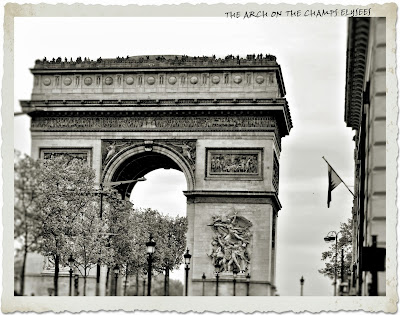
From our Paris (Black and White) 2014 Calendar.
From our Paris 2014 wall calendar.
From our New Orleans' French Quarter 2014 calendar.
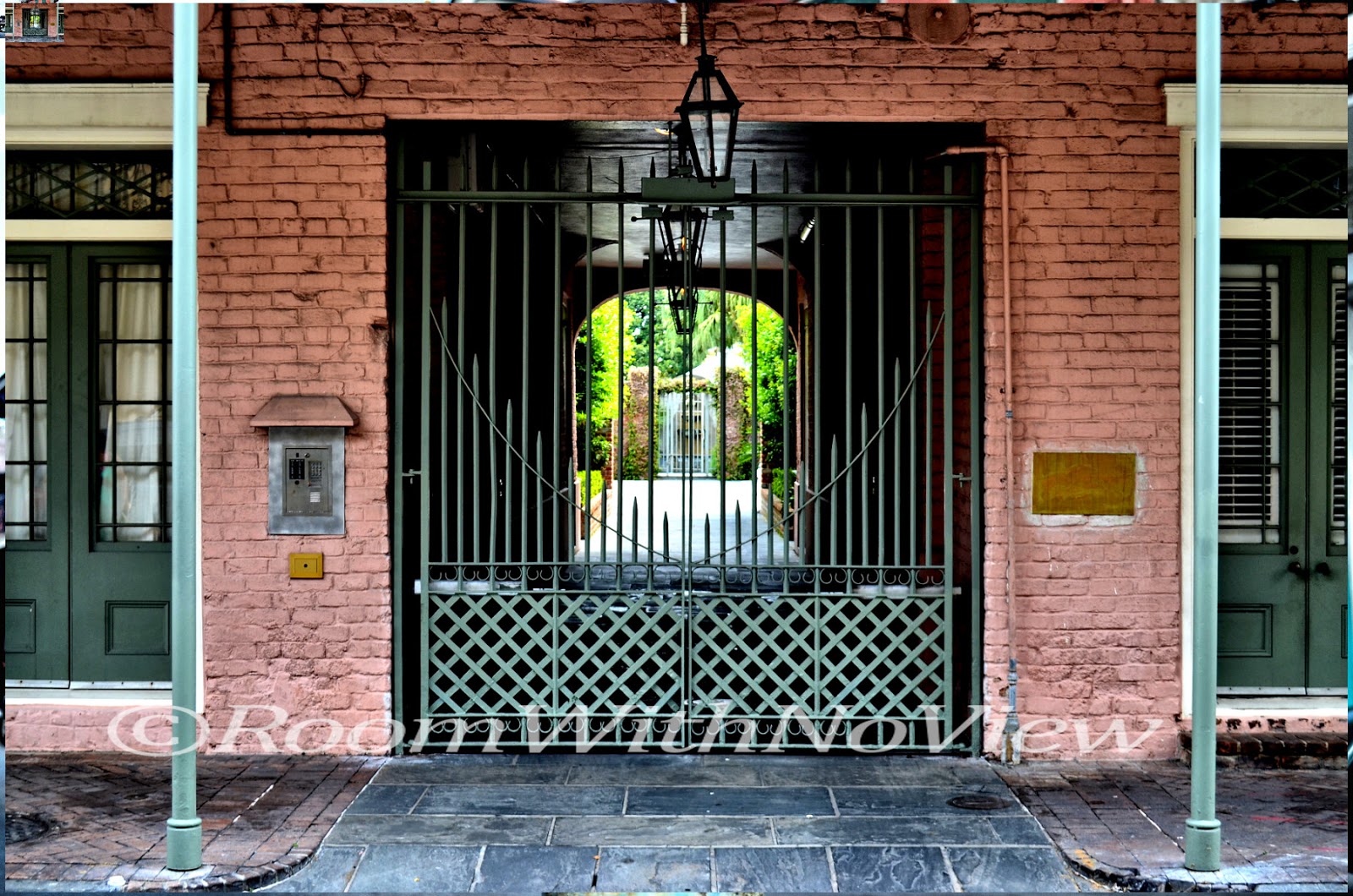
From our New Orleans Doors 2014 calendar


During the month of October, all of our calendars have a 30% discount.  Choose from our selection of New Orleans and Paris collections, and enter the code 2014CALENDAR at checkout.


Thursday, September 26, 2013

A View of The Lalaurie Horror

The Lalaurie Horror by Jennifer Reeser
(Today's post is just to point you in the direction of really great new release from Jennifer Reeser, a wonderful formalist poet who, I'm proud to say, is also my wife.)

Twice Nominated for Literature's Pushcart Prize.

On April 10, 1834, fire erupted at the mansion of wealthy, beautiful, twice-widowed socialite Madame Marie Delphine Lalaurie, a Creole of French and Irish heritage living on Royal Street in the famed French Quarter of New Orleans, Louisiana. First responders discovered seven slaves in the attic, victims of her torture chained to the mansion walls.

They were rescued, though to this day, at least seventeen slaves belonging to Madame Lalaurie remain vanished without a trace, and the roster of slave children, adults and elderly who mysteriously died in her care is considerable.  The lady herself escaped prosecution and was never brought to justice. 

Reports of hauntings and strange sights at the mansion have persisted through its 200 year history, with a long list of owners -- from humble school instructors to Hollywood stars such as the actor Nicolas Cage -- who each abandoned the house after a relatively short time, following a timeline of unfortunate events. At present, the Lalaurie Mansion is considered among the loveliest of homes in the United States of America, and reputed to be one of its most haunted, as well.

Jennifer Reeser conducts a spellbinding, poetic "ghost tour" through its chambers, exploring the real culture, cuisine, history, mythology and art unique to New Orleans, while at the same time creating an original story and fictional plot, told in a straightforward, classic form full of feeling, which should be clear to anyone, anywhere in the world. Readers will encounter such characters as Calavera, the Baron Samedi, and even Madame Lalaurie, herself.


What the literary journal, TRINACRIA, has described as, "...an amazing terza rima narrative of a tour through an old haunted house, done in unnerving Grand Guignol style."


A signed, print edition of The Lalaurie Horror can be bought for $8.00 at Saint James Infirmary Books.  A Kindle version, which can be read on any smartphone, or tablet, is available at Amazon for just $3.99.  Don't miss out on this unique tour of New Orleans.  And for those of you who are not big fans of poetry, this is a rare chance to read some of Jennifer's poetry that is a narrative form.  That's right, she tells a story, and what a story it is!

Thursday, September 5, 2013

An Early View of New Orleans in 2014

If you are like me, you're always looking for a unique calendar.  It always seems like the same calendars show up on the shelves over and over again: wolves, Marilyn Monroe, rainbows.  They even use many of the same pictures.  Even when my wife and I look for calendars of our favorite cities, we usually just see the same tired old shots.

So I've taken matters into my own hands, and my own camera.  Last year I designed several Paris calendars.  Sold on the website Zazzle, I was happy to provide an alternative for many people throughout the US and Canada who were shopping for a calendar that didn't just have the usual photographs of the Eiffel Tower and the Arc de Triomphe.  In addition to new Paris calendars for 2014, this year I am including calendars for New Orleans.  If you've been following Room With No View, you know I've been photographing that marvelous city quite extensively.

The first two calendars for New Orleans are now available.  Use the links below to order one (or both) of them after checking out a few of the photographs you'll find in the collections.


Wednesday, July 3, 2013

A Summer's View of the French Quarter

The French Quarter, New Orleans.
A Jazz Band tries to cool things down in Jackson Square.

The French Quarter, New Orleans.  It is known for its Mardi Gras and Halloween celebrations.  Yet, for those of us who are fortunate enough to be able to visit it throughout the year, we know there is more to this very unique city than her festivals.  This week, I took a walk around the Vieux Carré and thought I would highlight a few of the sights you might see if you take a July vacation in the Big Easy.


Right away, when you get to Jackson Square, you're gonna find someone, or some group, playing jazz.  It won't always be Dixie Land jazz, but you can be sure it's cool, hot, sweet, and spicy.  You'll usually find them out in front of the Café du Monde, or between Jackson Square and the St. Louis Cathedral.  In the picture above, I found this group in front of the Cabildo.  That's Café Pontalba behind them, which is one of the best places to eat some gumbo, red beans and rice, fried alligator, and jambalaya.  (That last item is my favorite.)  If you look closely, you'll notice that not all of the bands have traditional instruments.  This one has an honest-to-goodness broom guitarist.  You've got to hear him to believe it.  He'll sweep you away.  He can really kick up some dust with that baby.

Speaking of the Cabildo, here you can see that in July, the flowers are in bloom, including the bougainvillea, shrub roses, and especially those on the crape myrtles, which are a Louisiana specialty.

The Cabildo was built by the Spanish in the 1790's.  Aside from being the home to the Spanish government, it was also the site of the Louisiana Purchase transfer in 1803, once the New Orleans City Hall, the Louisiana State Supreme Court (which saw the landmark Plessy vs. Ferguson decision in 1896), and was used as a prison before it eventually became the Louisiana State Museum in 1908.

Not far from the Cabildo, which is on the right hand side of Saint Louis Cathedral, you'll find Orleans Street, which runs into the backyard of the cathedral, connecting Royal Street, the home of so many art galleries and antique shops, with Bourbon Street, the home of so many bars and strip clubs.

In July, the heat can be pretty rough.  While I was there, it was not bad in the shade.  As you'll notice, even the cigar shop Indian is wise enough to hang back in the shade on the banquette.  (The raised sidewalks in the French Quarter are called this because way back when, the small blocks were called islands, which led the French people in town to call the sidewalks banquettes, as in the banks along a shore.)

Speaking of the heat, if you need a place to get out of the sun, most of the hotels in the Quarter have these little passages that lead to their courtyards.  It is in these courtyards where you'll find respite from the midday sun where there is lots of shade, and more often than not, the cooling presence of a fountain.  

During my walk, it wasn't hot enough to seek out shelter.  Though I must admit those fountains looked terribly inviting.


In July, you'll get to see the splendor and variety of the houses in the Vieux Carré.  So many of the homes in this area are gaily painted to reflect the traditional decor associated with this French-influenced American neighborhood.  And many of them are kept in perfect condition, despite the damaging effects of the sub-tropical heat and the near constant high humidity.  There's also the effects of tropical storms and hurricanes to consider as well.  So with all of these elements attacking the wood, you'll find that there are many shutters and doors which have been mistreated.  However, I am always glad the residents don't repair every one of these at the same time.  They add such a wonderful flavor to the Quarter.  It would be a shame if every home there looked perfect.

My purpose for this day was to keep searching for shots to use for my calendars for 2014.  I am never sure which is better, the older, run-down look of the Quarter, or the fresher, painted, restored sections.  I really couldn't choose one over the other.  They're both inspiring in their own way.


But if you're looking for perfect, or at least something close to it, you'll find plenty of homes that will catch your eye.  Here, on Dumaine Street, just north of Dauphine Street, I was intrigued by the colorful display of paint along with the flags waving in the summer breeze.  How delightful it must be to live in such a colorful and cheerful home.

Not far from here I sat down to rest on a stoop and chatted with Louis, a photographer from New York, who was taking a break in the shade.  Though born and bred in New York City, he was down in New Orleans for the coming Fourth of July festivities.  We shared the shade and a little companionship before I moved on in search of more targets for my camera.

Because it was July, and many of the northern tourists did not realize it was actually a pleasant day (by local standards), many of them felt the best way to see the Quarter was to take a ride in the shade of a carriage awning.  You'll find plenty of carriages awaiting you on the south side of Jackson Square.  The drivers/guides will be more than happy to drive you around, dishing out as many legends and myths as you're willing to swallow.  The indefatigable mules, either a Jack or a Jenny, will pull you along, no matter the heat.  The clip-clop of their hooves is often the only sound you'll hear on the lesser traveled streets at noon.  Everyone else is inside a restaurant eating great food and having a few drinks.  (But easy on the drinks in the hot weather, okay?)

Now if you've seen enough of the Quarter, or you just plan to hit it later in the day, you can always grab a ride on the steamboat Natchez.  

Using steam engines built in 1925, the Natchez, one of only a few steamboats still plying the waters of the Mississippi today, will take you on a two hour trip along the river.  Leaving every day from the Toulouse Street wharf behind the Jax Brewery, the Natchez takes you down around the bend of the river past the Chalmette battleground.  Along the way you'll learn a little bit of history about the Mississippi and enjoy a cool breeze up on the top deck.

And when the cruise is over, you don't even have to walk back to your hotel.  The Toulouse Streetcar station is nearby, and so are a few guys willing to peddle you home in their pedicabs.  But if you can stand to walk just a little, I always suggest heading back to Jackson Square so you can grab a milkshake at Stanley.  Trust me on that one.  They're the best!

I'll leave you with a little tune from the Natchez, as played on their steam-powered calliope.  We filmed this as we were heading back to the car.  Look closely and you'll see the man standing at the organ.  Yes, they really do play it live.  It is not a computer programmed calliope, as I had once thought it was.


Use these links for 2014 calendars featuring my photography from New Orleans:
French Quarter Balconies Calendars
French Quarter Balconies Calendars by jreeser1


Also, you might enjoy this wrapped canvas photograph of Central Grocery.


View more gifts at Zazzle.


Friday, March 22, 2013

A View of the Café du Monde Corner

  Since 1862, Café du Monde has been serving café au lait and beignets to the people of New Orleans and millions of tourists in the same location across from the corner of Decatur Street and St. Ann street.  If you have ever visited New Orleans, or if you ever plan to, you will end up here.  Everyone does.


A coveted spot for street performers, this prime stage is guaranteed to feature a music act.  Such acts might include a few horn players, guitarists, or the occasional harmonica player.  You can't get more authentic blues jazz than the music you'll hear as you sip your coffee.  Just don't forget to drop a dollar or two into the bucket/hat/box/basket as you head off into the French Quarter.


To get to the French Quarter from Café du Monde, you'll have to cross Decatur.  Enjoy the last sounds of the musicians beside you as you wait for the signal to cross.  Once across, you won't need to watch for traffic on St. Ann, since it is closed to vehicles.


On your right, you'll see the Pontalba buildings, which were built by the Baroness Micaela Almonester Pontalba in the 1840s.  Originally they were row houses, but became apartments in the 1930s.  Many boutiques on the first floor provide ample shopping choices for tourists.  Restaurants are also in abundance, including Rivers Edge, Stanley, and the Pontalba Café.  The buildings face both the northeast and southwest sides of Jackson square.

If you're interested in a carriage ride around the Quarter, this is the place to find one.  You'll find plenty of carriages, pulled by either a jack or a jenny (a male or a female mule).  Expect to pay a fairly hefty sum to climb aboard (the current rate is $18 per person), however, you can be sure to hear only top-notch and highly entertaining lies from the drivers who are not hesitant to embellish their stories of New Orleans and its sordid past.


  If, instead of a carriage ride, you're hungry for some authentic New Orleans' food, you might want to walk a few blocks up Decatur street away from Jackson Square, until you reach Central Grocery.  Forget about all those little restaurants selling gumbo and boiled shrimp.  You can get that some other time.  Here at Central Grocery, which has been around since 1906, you can get one of the most famous sandwiches in New Orleans.  The Mufuletta.
  Made with an olive salad base, this iconic sandwich draws customers from the ranks of tourists, celebrities, and the local population.  Expect to stand in line for a short wait.  I've seen a line outside the doors on a Sunday morning before the store has even opened.  A little full disclosure here: I don't like olives, so I don't partake of this delicacy.  However, my wife loves them, and generally wants to grab a sandwich to take home as we're leaving the city.
  Central Grocery is also known for its variety of ethnic foods displayed on their shelves.  They carry Italian, Greek, Spanish, French, and Creole products.  Here you'll find canned octopus, hearts of palm, and (so I've heard) bumble bees in soy sauce.  I've not actually seen that last item there, but I didn't look very hard for it.
Don't think the kids would enjoy a coffee stand?  Think again! Our kids
learned to drink coffee here (it's really only half coffee, the other half is
cut with milk).  And there's no kid in the world who wouldn't want to eat
beignets.  Better than any doughnut, you'll love these treats, which are
always liberally sprinkled with powdered sugar.  Four in each order, you'll
want to get at least two plates.
  So be sure to stop by and get some coffee and beignets.  It may sound like Café du Monde is so famous you'll never get a table, but there always seems to be tables available.  You can even find it empty if you get up early enough in the morning or stay late enough.  It is open twenty-four hours a day, and every day except Christmas.  After Hurricane Katrina, it was closed for two months.  But it received little damage, and they took the down time as an opportunity to upgrade the facilities.  Also, remember that they only take cash, so hit the ATM before you go.

Use these links for 2014 calendars featuring my photography from New Orleans: