Like Jason's Facebook Page

Monday, October 7, 2013

Alfonso Cuarón's Gravity: A Movie that will Sweep You Off Your Feet

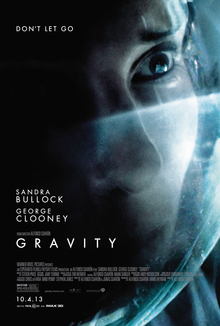
Gravity, Directed by Alfonso Cuarón

Think back to when you were a kid.  Your parents told you that they were taking you to a movie.  This is way back, like when you were so young that you barely knew what a movie was.  And they told you they were going to take you to see...it doesn't matter, any movie will do.  I'm talking about that point when you were so young, you went to the theater and sat in awe staring at the wonders of that giant screen--it looked bigger than a football field at this point in your life--and everything you saw then was a miracle.  Towering images burned their way into your young brain and, though you didn't know it then, they would stick there on the pulsating wall of your mind's eye for the next three or four decades.  Have you got the picture?  Do you remember this?  Do you realize that is the reason we continue to go to the movies, again and again, despite the fact that time and time again we are disappointed by the overall impression made by dozens and dozens of mediocre movies filmed simply to sell popcorn?

But we never give up.  We try again.  Just one more.  And the next one after that.

For once, a modern-day director has finally managed to satisfy that longing.  There have been rare occasions when I feel I've nearly touched that sacred peak where entertainment is engulfed by the sheer awe and wonder of the world as seen through the eyes of a child.  Most of the time, in the midst of this yearning, I'm taken out of the moment by what is now too common in movies--a jarring political statement, a crass cheap-shot played for laughs, or a nod to the bitter, cynical world that we all discovered is awaiting us on the other side of youth.  Any one of these little devils wreaks havoc with our ability to sit back and just be engulfed in wonderment.

Alfonso Cuarón, Director of Gravity
Alfonso Cuarón has been able to tap into that child-like need for astonishment with the help of his son, Jonás Cuarón.  Together, they have written a story that is full of humanity, set in the cold vacuum of space.  That would have been enough, just to tell a story about the remarkable astronauts who orbit above us without much attention anymore.  But if they had, they would have ended up creating a film that we've seen before.  A little conflict between the astronauts, a longing for home, a moment of courage or desperation.  It would have been moving, a nice tribute to all of those who have ever strapped themselves to a rocket.  Once we left the dark confines of the theater, we would have returned to our normal lives without giving it much more thought.

With today's overabundance of CGI, as witnessed by the throngs of underwhelmed theater-goers who sat through monstrous action-epics like Man of Steel and White House Down this summer, it would have been easy for the Cuaróns to rely on the dazzle of CGI to carry the story.  Filmed in 3D, there would have been plenty of chances to startle the audience with the studio's whiz-bang, now-you-see-it-now-you-flinch usual bag of tricks.  Maybe use the over-used shaky-cam to ratchet up the nerves.  Today's filmmakers have a fairly limited supply of gimmicks and regularly overindulge in them.  

Cuarón does not.

I know what you're thinking.  You want me to get on with the review.  Forget the mystical ramblings and just write about the movie.  But that is nearly impossible, since this movie is too perfect to give much of it away.  For this same reason the trailer was astonishingly short.  If they put out a longer trailer than that first teaser trailer I never saw it, and I'm glad I didn't.  So don't get impatient.  And don't be disappointed.  I'm not going to tell you about the movie.  But I am telling you about it when I wax poetic.  But if you insist, I'll say what I can about the film without spoiling it.

Sandra Bullock as Ryan Stone in Gravity
It is nice to see Sandra Bullock return to her roots, playing the damsel-in-distress as she did the first time she won our hearts as that wildcat bus-driver in Speed.  And just as she played off Keanu Reeves so well in that movie, always looking to him to save her, yet surprising us with her own inner strength, in Gravity she does much the same thing with George Clooney.  However, as her world shatters around her in the terror of zero gravity, something more than inner strength shines through.  She does not transform into a superhero who curses the gods and overpowers the fates.  Instead, as the terror rises around her, suffocating her in that black expanse above our world, Bullock allows us to see a very human, traumatized, yet trained astronaut fight off the inertia of her inevitable doom.

George Clooney, who I believe has been slowly ingesting little bits of Cary Grant Elixer, and increasing the dosage lately, turns in a fine performance as the one man you would want to depend on in a crisis.  He is believable, and has perfectly engineered chemistry with Bulluck.  As the film spun out of control, I was glad to have Clooney there as an anchor.  A nice touch for this casting includes the voice of Ed Harris at mission control.  It gives us a sense of continuity, since Harris was in the same role in the spectacular film Apollo 13.

But never mind all that.  Let's get back to Cuarón and his creation of something...amazing.  Never before, including the awe-inspiring 2001: A Space Odyssey, has a director been able to pack so much heavy atmosphere into the vacuum of space.  Usually, when I give in and watch a 3D movie, I'm distracted by the many different things going on across the screen.  But in Gravity, I was so sucked into this world-outside-a-world that I remained fixated on the movie from beginning to end.  My daughter, who attended the film with me, asked later if something was wrong.  I usually make comments throughout a film; this time I barely said a word.  It might have been because I didn't want to waste the oxygen in the theater.  After all, oxygen levels become terrifyingly critical.  Trust me.

Mostly, though, I think it was just that little kid in me, staring in awe at the screen, as a vision filled with miracles, nuts and bolts, and the need to grab hold of anything captured my imagination for 90 minutes.  That little voice that said "finally, it's here, this is why we go to the movies."

Don't miss your chance to see this on the big screen, in 3D.  Just be sure you find something to hold onto.  But if you don't, it won't matter, because the father and son team of Alfonso and Jonás Cuarón will grab hold of you and never let go.  

Cities of the Dead: Double Vision

Cities of the Dead, Jason Phillip Reeser

For newer readers of Room With No View, I'd like to let them know about my most popular book, which is perfect for this time of year.  Cities of the Dead is a ghost story collection set in the cemeteries of New Orleans, Louisiana.  Tales of ghosts, pirates, thieves, and dead rock-and-rollers can be found in this eclectic congregation of mystical chronicles.

Back in 2006, my wife and I took a guided tour of Lafayette Cemetery Number One in the historic Garden District of New Orleans.  It was the first time I'd been to one of the many above ground cemeteries that are nestled into the various neighborhoods of the Crescent City.  Due to the fact that the city sits below sea level, burying the dead is not possible, since the dead seemingly refuse to stay buried.  Citizens of the early city discovered that the saturated ground always shoved the dead back to the surface.  The simple response was to bury the dead above ground in crypts.  As a result, the cemeteries look like...well, let's let Mark Twain describe it.  His view on it sums it up the best:

Lafayette Cemetery Number One
There is no architecture in New Orleans, except in the cemeteries. They bury their dead in vaults above ground. These vaults have a resemblance to houses--sometimes to temples; are built of marble, generally; are architecturally graceful and shapely; they face the walks and driveways of the cemetery; and when one moves through the midst of a thousand or so of them, and sees their white roofs and gables stretching into the distance on every hand, the phrase 'city of the dead' has all at once a meaning to him. Many of the cemeteries are beautiful and kept in perfect order...if those people down there would live as neatly while they were alive as they do after they are dead, they would find many advantages to it.

Mark Twain, Life on the Mississippi, 1880

During our 2006 tour, which was just one year after Hurricane Katrina devastated that venerable city, amid the rasping wail of power-saws and chattering hammer blows (evidence of New Orleans' second reconstruction phase), we followed our guide past sun-bleached sepulchers and vibrant green alleys of thick, recently mown grass.  As a writer, I was struck by the crowded nature of this necropolis.  I began to wonder just what it would be like for ghosts to live here.  We generally think of ghosts in lonely, empty places like an abandoned house or a distant moor.  But here, if a ghost were to haunt the earth, it would not be lonely.  It would, in fact, be heavily beset by other ghosts.  Many of the crypts are family crypts, and family members are stacked in on top of one another like chord-wood.  Imagine, I thought, what sort of complications would arise between them all?

At the 2012 Louisiana Book Festival--look for us again on Nov. 2, 2013
Before long, I had begun to write a few stories along this theme.  Over the next four or five years, I added more stories, until I'd completed thirteen of them.  It seemed an appropriate number on which to stop.  Since the book's publication, it has been well-received.  It is a mainstay on the tables of a handful of stores down in the French Quarter, and was a popular item during its release at the 2012 Louisiana Book Festival.

Several of the stories are available here at Room With No View.  Just click on the links below to read them.
The Wanting Dead  (originally printed in The Louisiana Review, Spring 2008)

And now for the Double Vision!  Beginning this month, Saint James Infirmary Books has made it possible for costumers who purchase the print version of COTD to receive a free eBook version along with it.  Even better, if you purchased a copy of this book through Amazon in the past, you can log in and receive your free eBook copy also.  We are offering the same free eBook copy from the Saint James Infirmary Books website.  If you purchased a print copy from us (and all of our copies can be signed if you request it) or you choose to purchase one from us now, we will send you a free eBook copy of the book.  So be sure to get a copy today if you don't already have one.

For more information on the book, check out our website here.

To order a signed copy, just click this link.

Or you can use one of the Amazon links below.  The Kindle edition is on the left, the print edition is on the right.

Thursday, October 3, 2013

2014 Calendars from Saint James Infirmary Books

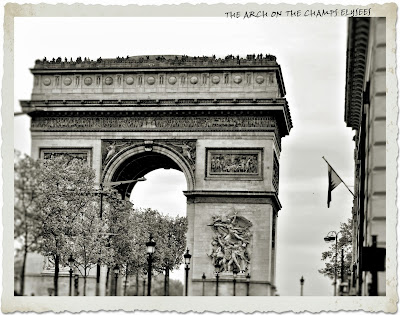
From our Paris (Black and White) 2014 Calendar.
From our Paris 2014 wall calendar.
From our New Orleans' French Quarter 2014 calendar.
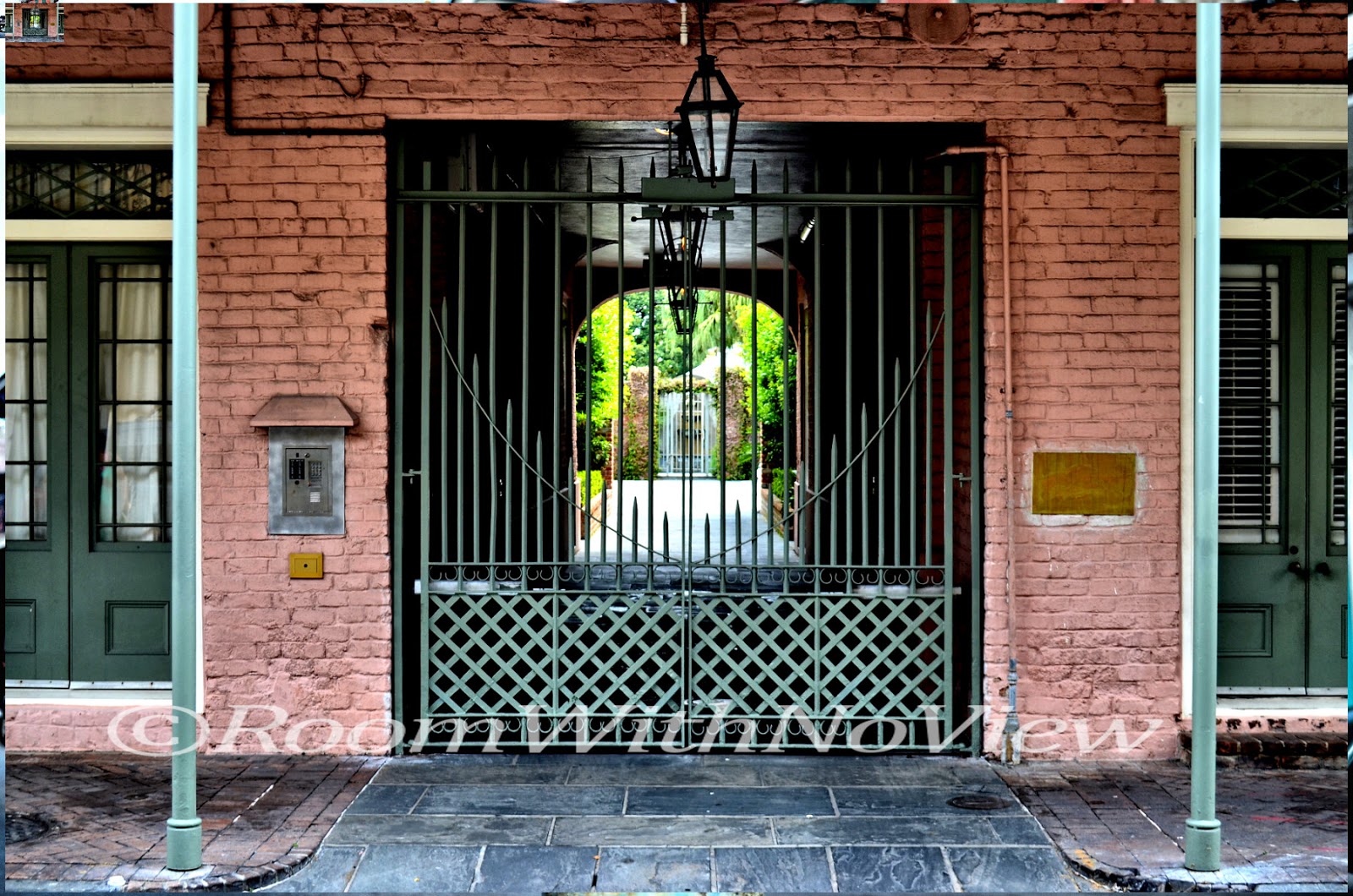
From our New Orleans Doors 2014 calendar


During the month of October, all of our calendars have a 30% discount.  Choose from our selection of New Orleans and Paris collections, and enter the code 2014CALENDAR at checkout.


Tuesday, October 1, 2013

David Morrell's Unexpected View of Frank Sinatra: The Artist and His Music


I had set out to write a review of David Morrell's unique thriller Murder as a Fine Art (which I still intend to write) but as I was researching the author, I came across something unexpected: this thriller writer, the man who created John Rambo in his debut novel First Blood in 1972, which eventually greatly influenced the thriller genre of that era (and continues to do so today!), had stepped way out of his expected role and written a short biography that examined the music of Frank Sinatra.  I was intrigued.  I'm a huge Sinatra fan, and I did not hesitate to grab this eBook off the shelf.

For two hours, I did not put down my Kindle.  I read it straight through.  And why not?  Morrell essentially leads us through a written two-hour concert tribute to Frank Sinatra's career, while highlighting the songs and albums, and mixing in the singer's personal, tumultuous history as it affected his outlook, his voice, his success, and his failures. Sinatra had an unbelievably long and prolific career, yet Morrell manages to make sense of it all, weaving it into a narrative that left me with a mosaic image of Sinatra I've never had before.

Not one to rest on is laurels, David Morrell
leaves the thriller genre to give us an intimate
look at the musical career of Frank Sinatra.
(picture courtesy of davidmorrell.net)
Instead of just writing about the popularity of the man, Morrell focuses more on the musical influences and choices made by the Chairman of the Board, covering many behind-the-scenes moments in the recording booths at Columbia, Capital, and Reprise Records. More importantly, he "gets" Sinatra. He understands that this man stood out with his attention to details like timing, diction, and lyrical passion. He explains the way Sinatra used to write out the lyrics by hand, over and over again, until he discovered the underlying meaning to the words, so he could sing those meanings back to the microphone and the audience. What Morrell really does here is explain to us why we like Sinatra. And as a big fan of Frank's, I'd say Morrell gets it right. If you love Sinatra, you've got to read this. If you are ambivalent about him, read this and you'll very likely come away with admiration for the man you never thought you'd have. If you hate him, this might just change your mind.

One of the many albums Morrell highlights of Sinatra's is In the Wee Small Hours (1955).  This has always been a favorite of mine, and the coverage it receives here is indicative of Morrell's insight into the man and his music.  If you are only familiar with Sinatra's big hits, and you want to hear one of his best concept albums (and as Morrell points out, Sinatra helped to develop the concept of the concept album) then click on that link at the bottom and download this album.  Sit back and be prepared to be won over by a sound experience you won't soon forget.

Morrell's study of Frank Sinatra does not shy away from letting us see the troubled side of this artist, but he never turns this piece into a gossip column. Instead, he shows how the alcoholism and the womanizing and the combativeness of this manic depressive combined to influence an industry that was just coming into its own in the middle of the last century. Was Sinatra a scoundrel at times? Yes. Was he sympathetic? Absolutely. In fact, both of those factors were a major reason for the public's interest in him. All of it came together to create an international icon that still influences pop-culture today. But Morrell does not dwell on these aspects of Sinatra's life. He keeps the story firmly on the music. And that's as it should be. Because Sinatra's music is a story worth reading. And David Morrell does Frank Sinatra's entire career justice in this short but exhaustive history of this brilliant, troubled artist and his remarkable music.

In addition to this piece on Frank Sinatra, Morrell also wrote one on Nelson Riddle, the arranger that became such an integral part of Sinatra's sound.  Riddle came to my attention with Sinatra first, but I began to see his footprint in many other areas of music, notably in the Ultra-Lounge CD series, as well as in such classic movies as Pal Joey and High Society and on television shows like Emergency! and even Newhart.  So I was aware of Riddle and had a high regard for his sound.  At the same time I bought Morrell's eBook on Sinatra, I grabbed his Nelson Riddle eBook as well: Nelson Riddle: The Man behind the Music, an essay (The David Morrell Cultural-Icon Series).  I haven't read it yet, but I look forward to it with eager anticipation.

And I still intend to write that review on Murder as a Fine Art.  Just not today.  Keep an eye out for it.

Friday, September 27, 2013

The Lost Books of my Youth

One of the many overloaded
bookshelves in our home.
Lately I've been spending a great deal of time thinking about books.  I know, this is hardly a surprise to those of you who know me or read this blog on a regular basis.  But I'm not just talking about writing books, or even reading books.  I'm talking about a collection of books I used to have when I was younger.  Let me explain.

When I was a kid, oh, like thirty-plus years ago, I can remember when it really started for me.  I was at a flea market, a really big one.  And as I walked past tables and tables of old farm implements (you know, the really scary looking ones that are used in all the slasher flicks) and used sewing machines and vintage toys and rusted old signs (this was before all the signs were reproductions), I came to a stop at a table with a bunch of old books mashed together with their spines facing the open sky.  It was a wonderful sight and I forgot all about the other vendors and settled in to look at those old tomes.

All of them were hardbacks.  I don't think any of them had dust jackets on them.  Just plenty of beautiful cloth covered books with titles imprinted on their spines.  Often the front cover was blank; a soft blue, or stark green, or even a faded red.

I don't remember how it was I had money in my pocket, but I must have had some.  Perhaps my parents had given me a few dollars to spend that day.  I was too young to be earning anything at that time.  But I was so entranced by these books, and they were so cheap, that I bought a good number of them.  An old Ben-Hur was among them; with a solid dark green cover, it had a fancy illustration on the front cover made of gold an silver leafing.  I knew it wasn't real, but it was dazzling to see.  A great big Robert Louis Stevenson volume of The Wrecker, which I'd never heard of, and a strange little book entitled The Autocrat at the Breakfast Table by Oliver Wendell Holmes, Sr.  I'd never heard of that before either.  I certainly had no idea what an autocrat was.  Why I picked that book I cannot remember.  But pick it I did, and it became a mysterious member of my collection.

Over time, I began to seek out more old books; a great big blue Gone With the Wind, a Vanity Fair by Thackeray, a slim volume of W. Somerset Maugham's The Razor's Edge, and other odd, strange, and delightful titles.  I read a great deal back then, but I rarely read much of the hardback collection I had gathered.  The edition of The Wrecker couldn't be read.  Many of the pages had not been cut.  This fascinated me, I had no idea books were printed like this, and I often pulled it out to try and peer in between the pages that were uncut.  This was always a challenge.

Eventually I amassed about forty or fifty hardbacks that became something of a burden on my family.  We moved more often than the average family, and boxing up and moving these books was a bit of a problem.  Lugging boxes of hardback books up and down stairs is a memorable experience, to say the least.  However, I don't recall my parents complaining about them, and they stayed with me until I married.  I still regret the fact that I loaded most of them up and sold them to a used books store one day so that we could make the rent payment early in our marriage.  I really didn't get much for them.  Pretty much nothing at all.  Of the ones I held onto, most of them were ruined when hurricane Rita blew through the back of our home in 2005.  They ended up in a pile of wet pulpy trash on the side of the road.

The survivors.  By the way, whatever happened to Thomas B. Costain?
When I was a kid, there was always a wide selection of his books
in every library.  I suppose he was the James Patterson of his day.
Searching the stacks and stacks of books I've accumulated since I married, I can only find a few of the original (and to me, infamous!) hardbacks.  I still have that Gone With the Wind, and a rather gaudy looking The Silver Chalice.  One of my favorites from that collection, and one of the few that had a dust cover, was Thomas B. Costain's The Tontine.  (This was the first of two volumes.  I never did own the second, though I read them both.  I can't remember where I finally found the second volume.  Must have been a library, since I didn't buy it.  After all these years, I can finally buy the second volume for a few dollars on Amazon Marketplace.  Maybe one day I will.)

I read all three of those books.  Of the others I had collected, I read The Moon is Down by Steinbeck (a wonderful book!), and maybe only one or two others.  I read a little from the collected works of Washington Irving.  But many of these old books were so old, the pages were brittle and I was not too keen on ruining them.  It was as if I had become like the Eloi, from H.G. Wells' The Time Machine, existing side by side with the great literature of mankind yet never reading them as they slowly decayed into nothingness.  Actually, a number of them I actually did read, but I used volumes from the library so as not to cause undue damage to the older hardbacks.

I have a newer collection of books now; hundreds of books are scattered throughout my house.  I don't move anymore.  Or haven't for some time, which is a good thing considering the total weight of books in our house.  A little more than half of the books I have now I've read.  There are a few that I haven't read and will never read.  But getting rid of them is hard.  I still bear the scars from that trip to the used bookseller to pay the rent.  But I still enjoy looking over the titles, some with fond memories of what I'd read in them, some with the excitement of not yet knowing what is in them.

Most of my reading is done on a Kindle now.  I can carry all of the books I've ever read and ever want to read in that one, slim digital device.  Yet I'll always cherish the books that clutter up the house.  They're important.  I expect my grandchildren to grow up around them, occasionally pulling them out and paging through them with curiosity and wonder.  I'd be disappointed if they didn't.  They were always here for my kids, and I know it had an effect on them.  You can't grow up in a house full of books and not be influenced by them.

Now I've got to go finish the latest book I'm reading.  I've collected over thirty titles on my Kindle that I have yet to read and I really need to get to them.  So many books...so little time.


Thursday, September 26, 2013

A View of The Lalaurie Horror

The Lalaurie Horror by Jennifer Reeser
(Today's post is just to point you in the direction of really great new release from Jennifer Reeser, a wonderful formalist poet who, I'm proud to say, is also my wife.)

Twice Nominated for Literature's Pushcart Prize.

On April 10, 1834, fire erupted at the mansion of wealthy, beautiful, twice-widowed socialite Madame Marie Delphine Lalaurie, a Creole of French and Irish heritage living on Royal Street in the famed French Quarter of New Orleans, Louisiana. First responders discovered seven slaves in the attic, victims of her torture chained to the mansion walls.

They were rescued, though to this day, at least seventeen slaves belonging to Madame Lalaurie remain vanished without a trace, and the roster of slave children, adults and elderly who mysteriously died in her care is considerable.  The lady herself escaped prosecution and was never brought to justice. 

Reports of hauntings and strange sights at the mansion have persisted through its 200 year history, with a long list of owners -- from humble school instructors to Hollywood stars such as the actor Nicolas Cage -- who each abandoned the house after a relatively short time, following a timeline of unfortunate events. At present, the Lalaurie Mansion is considered among the loveliest of homes in the United States of America, and reputed to be one of its most haunted, as well.

Jennifer Reeser conducts a spellbinding, poetic "ghost tour" through its chambers, exploring the real culture, cuisine, history, mythology and art unique to New Orleans, while at the same time creating an original story and fictional plot, told in a straightforward, classic form full of feeling, which should be clear to anyone, anywhere in the world. Readers will encounter such characters as Calavera, the Baron Samedi, and even Madame Lalaurie, herself.


What the literary journal, TRINACRIA, has described as, "...an amazing terza rima narrative of a tour through an old haunted house, done in unnerving Grand Guignol style."


A signed, print edition of The Lalaurie Horror can be bought for $8.00 at Saint James Infirmary Books.  A Kindle version, which can be read on any smartphone, or tablet, is available at Amazon for just $3.99.  Don't miss out on this unique tour of New Orleans.  And for those of you who are not big fans of poetry, this is a rare chance to read some of Jennifer's poetry that is a narrative form.  That's right, she tells a story, and what a story it is!

Friday, September 20, 2013

My View of Rosedown Plantation (Part Three)

Rosedown Plantation, St. Francisville, Louisiana.

Today's post is the final look at the historic garden plantation, Rosedown.  After our introduction in part one, and our interior tour of the house in part two, we'll now take a final walk around the grounds.  And as promised, I'll introduce you to a friend we met along the way.

Just off the southwestern corner of the house, you'll find the formal gardens.  Admittedly, during our visit, there were not many flowers in bloom.  It was early September, and most of them were still in heat-check.  However, we did see plenty of marigolds, ageratum, phlox (white and pink), as well as flowering crepe myrtles and butterfly bushes.

But don't worry, in this view on the left, from the formal gardens, you can see that even the pond looks picturesque in the late morning sun.  
As I mentioned in the first post on Rosedown, Martha Turnbull was inspired by her trip to Europe in the 1850's to build these gardens, which eventually expanded to 28 acres of lush, carefully planned walks and gardens.  The old brick wall in this picture is what is left of the original conservatory, where many of the plants would have been carefully raised.

According the Louisiana State Park web site, these were some of the largest private gardens in the United States in the 19th century.

Midway down the grand Oak alley that approaches the house, you will see this view of the North Garden's fountain and summerhouse on the left.  There is a corresponding summerhouse in the South Garden.  The playful sounds of the fountain were a special addition to the stillness of the gardens.  

It would be very easy to lose yourself in the solitude and peace that shrouds these grounds like the Spanish moss on the oaks above.


  As soon as we arrived in the parking lot, this tough-looking fella crawled out from under a car and introduced himself.  He was eager to show us around.  After we paid the entrance fee (as of this date, the entrance fee is $10 a person) he accompanied us as we began our walk through the paths of the North Garden.  He was not in the least interested in the spider-webs that spanned the pathways, nor the menacing banana spiders that brooded in the center of them.  He was short enough to pass under them without giving them the least thought.

However, he was happy to have company, rubbing himself against my ankles as I stopped to take a few snapshots.  He even made sure to get my attention so that he would make it into my blog.  I only noticed he was gone when I heard him crashing through the bushes after a very noisy and frightened pigeon.

The sun-dappled privet hedges and paths provide plenty of opportunity for visitors to take in this breath-taking plantation.  For those of you who are gardening enthusiasts, the bookstore at Rosedown sells copies of Martha Turnbull's extensive gardening journals, which detail the intricacies of the preparation and maintenance processes necessary to create and sustain such impressive landscaping.

A link is provided at the end of this post if you are interested in the diary.

  
This map, which is provided at the beginning of the tour, gives you an idea of the scope of the Rosedown gardens.  During the 1950's restoration, great care was taken to use the most accurate varieties of plants they could find.  Using Martha's diary, they were able to recreate her antebellum world.  

Many thanks go out to the staff of Rosedown Plantation for their friendliness and hard work.  It made for an enjoyable stroll beneath spreading oak trees, cypress trees, and even the oldest pine tree in the state.  We won't soon forget this world that is well off the beaten path of all that is ordinary.

And one last bit of advice for visitors:  There is no restaurant on the grounds.  However, just down the road in St. Francisville, you'll see Sonny's Pizza, a local joint with some of the best pizza I've had in a long time.  Don't hesitate to check them out.


Like the photograph of the approach to Rosedown at the top of this post?  It is available as a coffee mug at the following link.


Saturday, September 14, 2013

My View of Rosedown Plantation (Part Two)

Rosedown Plantation, St. Francisville, Louisiana.

Having taken a tour of the grounds around Rosedown Plantation in our last post, as promised, I'll give you a tour of the interior of the home on this trip.
The foyer of the house grabs your attention as soon as you step in out of the sunlight.  This open entryway is colorfully decorated with a wall paper that, while not original to the house, is an exact copy of the original wall-covering, manufactured by the original European firm that first supplied the design over one hundred and fifty years ago.

The home remained in the hands of the original family from the time it was built, in the 1830's, until the mid 1950's.  At that time, Catherine Underwood, a Texan, purchased the estate and spent $10 million on a ten-year restoration.  This included researching and commissioning the recreation of the wall décor.
Our tour was conducted by a very friendly guide, Sasha, who was full of wonderful information on the restoration as well as the history of the home.  A few rules were stressed, including the requirement that we not use a flash with our camera, and we were asked not to touch anything in the home.  It was easy to see why.  All of the furniture was original, and you could tell.  Not that it looked old and used.  Far from it.  It was all in excellent and remarkable condition, considering the humidity of Louisiana.  (Now the home is air-conditioned, which was a nice treat on that hot summer day.)   But you could simply sense that these marvelous pieces were not merely imitation tables and chairs and divans.  The Turnbulls, the family that built Rosedown, were extremely wealthy, and they furnished their home accordingly.

Being wealthy in the America South of the early 19th century, they were slave-owners.  A large plantation, Rosedown included about 450 slaves at one time.  According to the guide, this stairway was built for the Turnbulls with the skilled carpentry of their slaves.  As she pointed out, after over one-hundred and fifty years, they are still solid, and do not even creak.  A testament to the slaves' skill.

However, these were not the only stairs in the house.

In the back of the house, in the butler's pantry, between the dining room and Mrs. Turnbull's office, you can see these stairs that were used by the house servants.  When the house was restored, these stairs were left as they were found, in order to preserve their condition for display.  As you can see, the edge of the wooden steps are heavily worn down from a century of use.

This view is from the second floor, as it goes down into the butler's pantry.  At the top of these stairs is the attic, which we were not allowed to see.  (What a disappointment!)  However, it was the only part of the house we were not allowed to see.  As house tours go, it was a very thorough tour with near-total access.  Something that is not always the case in historic homes.

The dining room was still flooded with morning light, despite the fact that it was after 11 AM.  Here in the dining room, there was one main meal of the day, eaten around two in the afternoon.  According to our guide, the fan above the table was operated by a young slave who sat on a seat against the wall.  Though the guide did not mention it, I wondered if they hired servants to do this after 1865.  I'm just glad the fan above our own table is electric.

Just outside the front of the house, off to one side, was a small office built for the family's doctor.  Martha Turnbull had three children; Sarah, who would eventually raise 10 children at Rosedown, and two boys, one of which died of yellow fever at the age of seven.  Hired to care for the children, the doctor remained to care for not only the family but the entire slave population.  It was a rarity for a plantation to have a doctor on site for the slaves.

The plantation was ravaged by Northern troops during the war, and Sarah's family (she married James Bowman from the nearby Oakley Plantation) kept the plantation in operation with the aid of 250 sharecroppers.

Upstairs in the master bedroom, there was this little collection of sundries.  The wedding dress off to the left was a reproduction of Sarah's original dress.  Along the way I also saw swords, wicker bustle supports, shotguns, and lots of personal papers.

The personal papers were well preserved from the family, who never seemed to throw out any papers.  Receipts, notes, lists, sheet music, and schoolwork; it was all there for the preservationists to discover and examine.  Many of them have been laid out so that visitors can catch a glimpse of the Turnbulls' daily lives.

The master bedroom was not particularly large.  However, considering that Sarah and James had ten children, it was a fairly large (and busy!) room in comparison to the three smaller rooms that were used for the children.

Sarah lived until 1914.  Her four unmarried daughters, Corrie, Isabel, Sarah and Nina, became the sole inhabitants of Rosedown.  When Nina, the last daughter, died in 1955, they had managed to keep Rosedown debt-free, as well as held onto 3,000 acres of land, 28 acres of gardens, the house and its furnishings.  They were remarkable women, considering everything the plantation had seen, including the Civil War and the Great Depression.

The nursery looked very cozy.  It must have been, with all of those kids!  I was amused to see a fireplace in the nursery.  We are so safety conscious today, the Turnbulls might have been brought up on reckless endangerment charges for having a fireplace in the nursery.  However, as the guide pointed out, how else would they have heated the room?  And as my wife pointed out, there was probably a nursemaid on duty to keep an eye on them.  Or maybe at that time, kids were just so used to seeing fires that they weren't tempted to play with them.  Yeah, sure.

As the tour came to an end, we ended up in the library.  This beautiful room was graced with three bookshelves, one of  which you can see in the picture here.  They were not built on site, but were ordered from abroad.  They were supposed to be made with the same dimensions, but when they arrived, it was discovered that they were not of equal size.  Instead of having them sent back and others made, it was decided to offset the chimney.  This was not such a difficult decision when slaves were available to do such labor-intensive work.  Still, it seems a bit extreme.  It is sort of comforting, however, to realize that even the extremely wealthy have to deal with things like this.

Sasha did a great job of showing off the house and its history.  We were the only ones on the tour, so it was an unhurried, quiet tour.  The guide even treated us to her own rendition of Beethoven's Für Elise on the Turnbull's pre-Civil War piano.  It still sounded amazing.  Again, a difficult feat in the Louisiana humidity.  And yes, I too saw the irony in her playing a piano on which stood a card that clearly read please do not touch.

So be sure to take the time to tour the inside of Rosedown while you're visiting the grounds.  There is much more to see than what I've included here.


Next post I'll show a bit more of the formal gardens as well as introduce you to a friend I met while we were there.

Like the photograph of the approach to Rosedown at the top of this post?  It is available as a coffee mug at the following link.


Monday, September 9, 2013

My View of Rosedown Plantation (Part One)

Rosedown Plantation, St. Francisville, Louisiana.
The sun was shining strong the morning we drove north on US Highway 61.  Just about twenty minutes north of Baton Rouge, in the quiet, historic town of St. Francisville, we arrived at our destination: Rosedown Plantation.  It was a splendid September morning, perfect for taking in the natural beauty of this one-hundred-and-eighty-year-old estate.  After passing through the entrance, we paid the ten dollar entry fee (per person) and were directed to enter the grounds through a small path that led through tall azalea bushes and even taller cypress trees.  Spanish moss draped the canopy above.  Right away, we discovered that Spanish moss was not the only material hanging about.

Spread across the path were many large webs with these rather alarming looking banana spiders sitting directly in the center of them.  These are actually a fairly common site down here in Louisiana, as my kids can tell you from growing up in the country.  Run around playing hide and seek in the myrtle bushes and you're going to run into this yellow fellow eventually.  My wife can still remember her childhood experience of walking into a web and seeing the spider start towards her.  Her uncle pulled her out of the web in time to prevent her from being bitten but not soon enough to erase the nightmares.  Though everyone here calls them banana spiders, they are actually golden silk orb-weavers.  Their webs are spectacular works of art, and though they will bite and their venom is similar to a black-widow bite, it is far less powerful.  But I didn't want to test that theory.  However, once we were on the paths of the North Garden, there was no way to get out except under and around all the webs.  So we crouched, and walked very slowly until we made it out into the open approach to the house.

There were no identifying marks that I could find on
these statues, so this could either be one that
represented a season or any of the mythological characters.
As we stepped into the open, we were treated to an iconic view of the plantation house down a lengthy avenue of oak trees.  On an ancient brick base, I found a faded plaque which read:

STATUES: THE CARRARA MARBLE STATUES WERE PURCHASED IN ITALY IN 1851 WHEN MARTHA AND DANIEL TURNBULL AND THEIR DAUGHTER, SARAH, TOURED EUROPE.  THOSE ALONG THE AVENUE ARE NAMED FOR MYTHOLOGICAL CHARACTERS AND THE SEASONS.  THE FOUR FACING ROSEDOWN HOUSE REPRESENT THE CONTNENTS (sic).

There was no statue on this base.  There were several bases which seemed to be missing their statues.  However, there were still several of the statues in attendance along the avenue, and the four figures representing the continents still face the house.  I wanted to linger along the avenue, however, the house tour was about to begin, as it was 10:55 and the tours begin every hour on the hour.  So we walked through the shade of the oaks and approached the front porch.

The front approach to the house, as seen from its
balcony.  Two of the Carrara marble statures that
represent the continents can be seen on the left.
The stately feel of that approach is truly spectacular.  These formal gardens were designed and built over a twenty year period under the direction of Martha Turnbull after that grand tour of Europe.  She is said to have been influenced heavily by the formal gardens she saw there.  I can believe it.  Having recently been to Versailles and the Tuileries gardens, I can say that Rosedown, while not as large as those sites, can certainly stand in their company without shame.  Rosedown's gardens were in fact some of the only formal gardens found in the United States in the 19th century.

Rosedown is far too extensive and fascinating to cover it in one blog, so I'll stop here for now.  Next post we'll look at the interior of the house.  A third post will cover the formal gardens.
The avenue of oaks leads to this idyllic walkway, which leads to the front porch.  It was easy to imagine
riding up the avenue in a carriage.  Despite the heat of the day, it was pleasant under the shade of the oaks.
This lady was surrounded by Spanish
moss, azaleas, and banana spiders.


Like the photograph of the approach to Rosedown at the top of this post?  It is available as a coffee mug at the following link.


Thursday, September 5, 2013

An Early View of New Orleans in 2014

If you are like me, you're always looking for a unique calendar.  It always seems like the same calendars show up on the shelves over and over again: wolves, Marilyn Monroe, rainbows.  They even use many of the same pictures.  Even when my wife and I look for calendars of our favorite cities, we usually just see the same tired old shots.

So I've taken matters into my own hands, and my own camera.  Last year I designed several Paris calendars.  Sold on the website Zazzle, I was happy to provide an alternative for many people throughout the US and Canada who were shopping for a calendar that didn't just have the usual photographs of the Eiffel Tower and the Arc de Triomphe.  In addition to new Paris calendars for 2014, this year I am including calendars for New Orleans.  If you've been following Room With No View, you know I've been photographing that marvelous city quite extensively.

The first two calendars for New Orleans are now available.  Use the links below to order one (or both) of them after checking out a few of the photographs you'll find in the collections.